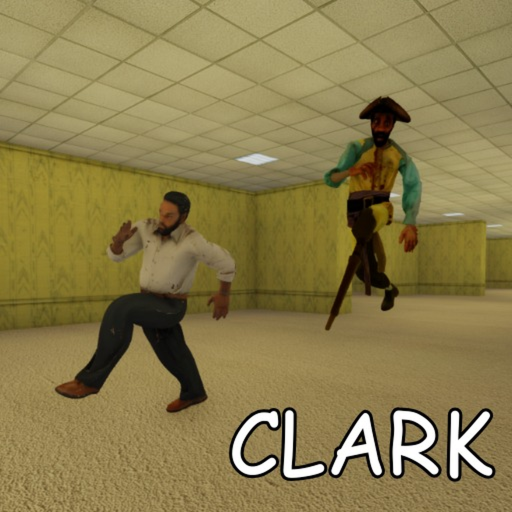
Rooms Unlock One at a Time
Early access runs advance through sequential procedural halls — not a single static map image.
Players searching for a Clark Huss rooms level list often expect a DOORS-style floor counter. mothem_XD’s early access instead ships sequential room unlocks inside procedural Backrooms halls — the set expands with shutdown patches rather than a published static chart. On 29 July 2026, the last Roblox page update remains 22 July 2026 — see July 29 status.
This guide documents verified progression flow for early access: how rooms gate forward movement, where hidden keys appear in community reports, and how map literacy from room layouts accelerates deep runs.
Progression snapshot (29 July 2026)
| Topic | Verified early access status |
|---|---|
| Sequential room unlock | Core loop — complete to advance |
| Static level count | Not published — expands with patches |
| Hidden keys / switches | Reported in some room modules |
| Procedural layout | Varies per run — archetypes repeat |
| Run lock after first door | Always — first-run guide |
| Minimap / floor UI | Not relied upon — navigate by landmarks |
Treat exact room counts as moving targets until mothem_XD publishes official numbers.
How progression works in Husrooms
Clark Huss rooms inherits GMOD Rooms DNA: each run is a self-contained session through linked hall modules. Progression typically follows:
- Lobby staging — squad forms, controls tested, first door not yet opened.
- Run lock trigger — first progression door opens; server closes to new joins.
- Sequential modules — completing objectives or reaching exit triggers unlock the next segment.
- Resource pressure — flashlight batteries and sprint stamina compound across modules.
- Entity escalation — Clark pressure intensifies as squads advance — survive Clark.
- Run end — wipe, extraction, or current early-access win state depending on build.
The map hub explains why procedural grammar matters more than memorising one seed.
Hidden keys and interact gates
Community reports describe room modules that require hidden keys, switches, or multi-step interact prompts before the next segment opens. Because generation is procedural:
- Key locations vary by seed even when key-gated modules repeat as tile types.
- Squads should assign a search role — see multiplayer guide.
- Audio cues from entity sound guide help search without splitting blindly.
Do not trust static “key location maps” from social media — they depict single seeds or pre-July patch builds.
Navigation habits for deep progression
Junction discipline
At T-junctions under Clark pressure, teams that split without callouts wipe. Standardise vocabulary from map hub: long hall, dead end, open loop.
Light budgeting
Deeper modules mean longer total run time. Battery discipline from flashlight guide separates deep runs from early wipes.
Prop and grab utility
Some lobbies report Q prop mode for hide segments — experimental, not required for progression.
Video: procedural hall flow for progression runners
Understanding Rooms pacing prevents panic sprint at progression gates.
Pair with how to play for session flow before studying module gates.
Speedrun and progression overlap
Players chasing speedrun records optimise the same progression gates — faster key finds, cleaner junction routing, minimal backtracking. Patch changes retune both casual deep runs and record attempts.
What changes when patches land
Early access shutdown updates may:
- Add new room modules extending maximum progression depth.
- Retune key-gated module frequency in generation pools.
- Adjust Clark patrol intersection with late-module hall geometry.
We update this page when streamers document repeatable new modules post-shutdown, not from datamine leaks alone.
Study path for progression-focused players
- First run — door lock and lobby habits.
- Room layouts — junction archetypes.
- Beat entities — mid-run threat handling.
- Level progression — this page, revisited after patches.
- Endgame goals — skill depth beyond first modules.
Related pages
- Map hub — navigation mindset.
- All entities — threats by progression stage.
- July 29 status — patch context.
- Tier list entities — threat priority during deep runs.
Progression in Husrooms is how far calm navigation takes you — not a number on a leaked floor chart.
Frequently Asked Questions
Quick answers to the most common questions.
How many levels are in Clark Huss rooms?
mothem_XD has not published a fixed count. Early access expands with patches. Rooms unlock sequentially within each run.
Do I need keys to progress?
Some community reports describe key-gated modules. Locations vary by procedural seed.
Is there a map showing all levels?
No verified static map covers all seeds. We teach progression flow and layout archetypes instead.
Does progression reset each run?
Yes. Each run starts from lobby. Run lock applies after the first door.
Will new levels arrive in updates?
Likely as early access continues. Watch the updates hub after verified shutdown patches.
Where should progression players start?
First run guide, room layouts, then this page for gate habits.